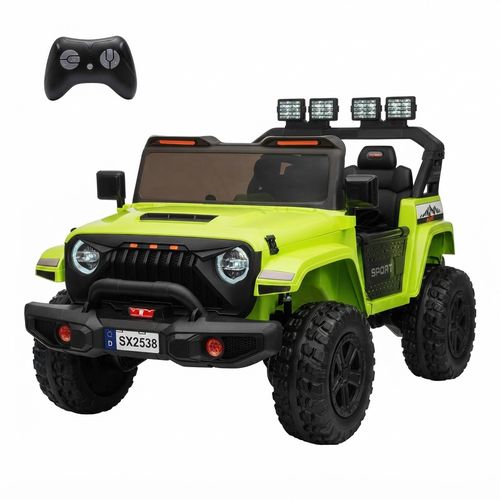
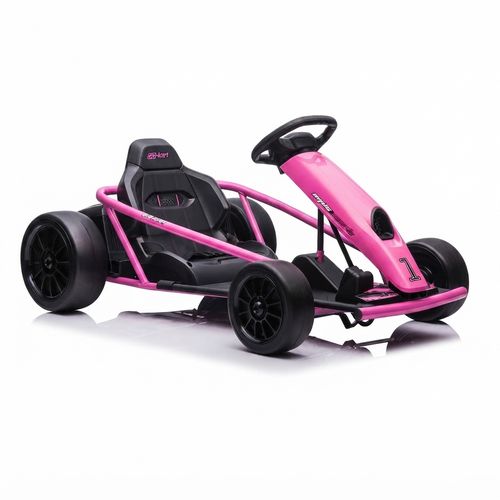
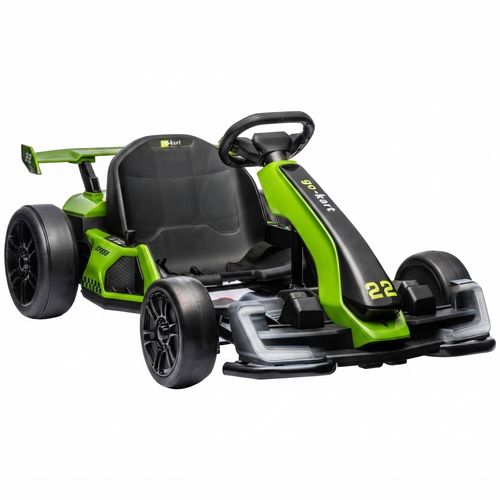
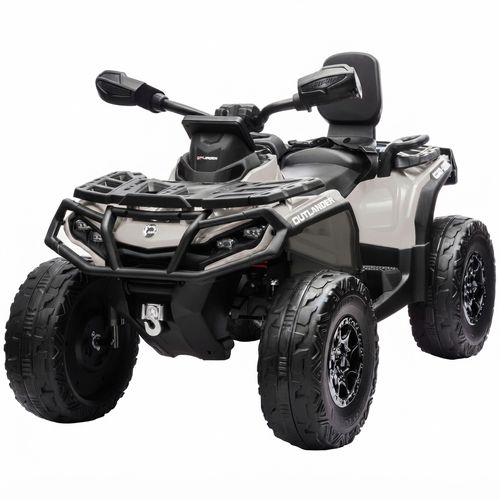
Nasitip Kids Ride-On Electric Cars, Go-Karts and ATVs
Park a licensed Nasitip ride-on beside the real car in the garage and a three-year-old takes a 1.6 mph first lap, while a twelve-year-old rides the 13.6 mph dirt bike down the same drive. You have read the word durable on every listing you opened this week, and not one of them printed a charge time. Read the figures here first: 561 verified buyers average 4.3 stars, but the scores split from 3.8 to 5.0 by model, and the low ones cluster on two parts you can test in week one.
You are buying a battery toy that has to survive a winter in the garage and a rider who never brakes. Weigh your rider before you weigh the styling: the 12V cars stop at a 66-lb cap, the go-kart seats 175 lbs, and every one of them leaves the factory without a manufacturer guarantee.
Sit a five-year-old in a 12V licensed car for flat driveway laps; put an eleven-year-old on a 24V kart when the ground turns to grass and gravel
Plug the pack in after bedtime and the 8 to 12 hour charge returns 30 to 60 minutes of driving the next morning
No brand guarantee follows any build home, so the retailer's return window is the only thing standing between you and a dead pack in March
ASTM F963 and CPSIA namedPrinted on the tractor and the licensed Toyota truck listings, not implied brand-wide.
2.4GHz parental overrideSteering and braking stay in an adult hand on every licensed car and the excavator.
Adjustable seat belts fittedBelted seats across the licensed cars, the dump truck and both go-karts.
No brand guarantee ships with itThe retailer return window is the only cover, so run the pack flat in week one.
Ride-On Cars, Karts, Diggers and Bikes
Licensed cars, go-karts, a dirt bike and an excavator, split across 12V and 24V battery packs.
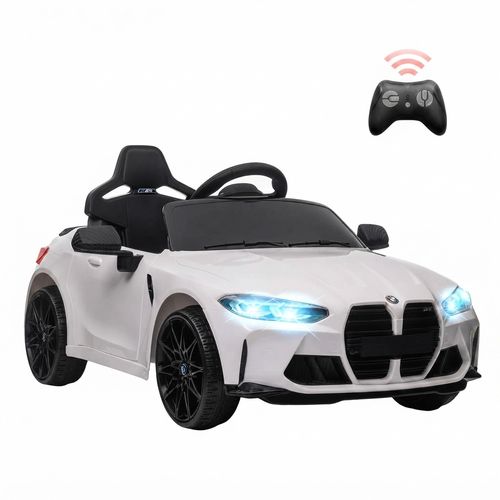
Licensed BMW M4 12V Ride-On Car
. 4.8 (46)
Park it next to the real M4 and the licensed shell holds up: 43 inches long, 38.6 lbs, grille and badging copied from the road car. Top speed stops at 5 mph across three selectable settings, so a three-year-old crawls the driveway on the low one and a six-year-old gets the fast one once steering clicks. Where a pedal-only car keeps rolling until a foot lifts, an adult overrides it from a few feet away mid-lap. Buyers rate it 4.8 stars across 46 ratings; one found the rear axle offset out of the box, so roll it straight and check alignment while the retailer's return window is still open.
43 inches of licensed BMW M4 bodywork at 38.6 lbs, light enough for one adult to carry down porch steps
On grass only the top setting keeps moving, and it still crawls, because this shell is built for asphalt and smooth concrete.
This listing states no manufacturer warranty; check axle alignment inside the retailer's return window
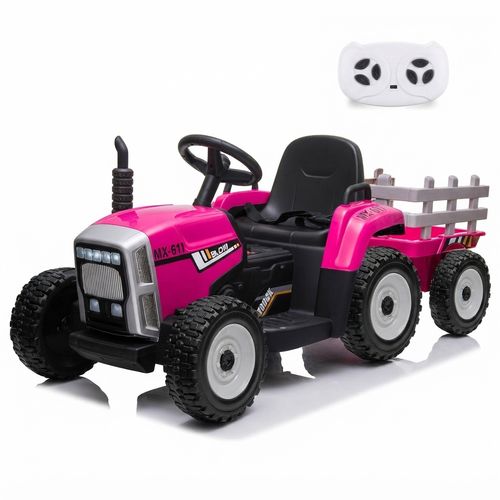
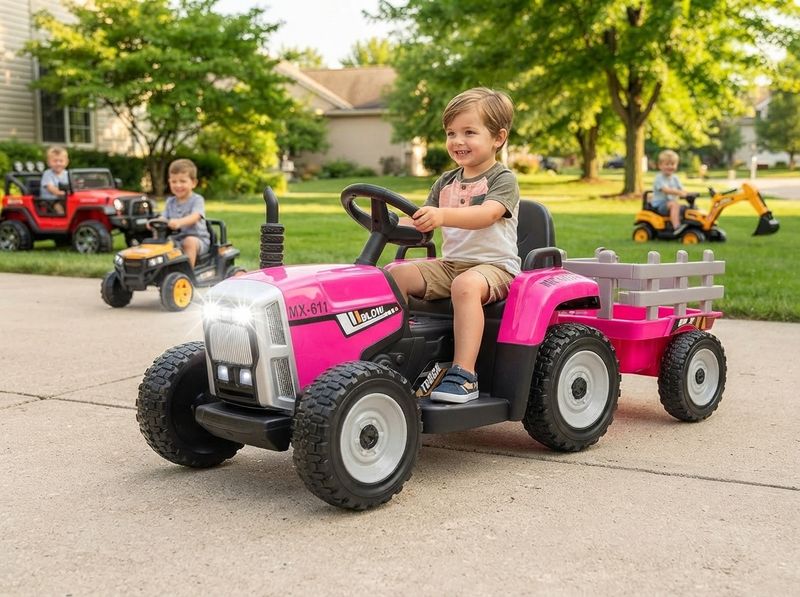
Hitch the trailer, load it with fallen sticks, and a three-year-old hauls the pile across the lawn at walking pace. Assembly takes 10 to 20 minutes because the 54-inch body arrives mostly built, and the 35W motor on EVA tires pulls through gravel where hard plastic wheels spin. Read the certification line before you order: ASTM F963 and CPSIA are named here, where most ride-ons this size print nothing at all. This is the most-rated build here at 4.2 stars from 124 buyers: one owner charged it three times across a full year, another lost the starter after the window had closed. Turn the key twenty times in the first week, because the starter is the part that failed for the owner who missed the window.
A dashboard battery indicator sits in front of the rider, so a three-year-old checks the charge before rolling out to the far fence.
Push the tractor onto loose gravel and the EVA foam squashes into the stones for grip, where a hard plastic wheel sits on top and spins.
Scroll 124 verified reviews on this tractor, the deepest history in the line, and the score holds at 4.2 stars.
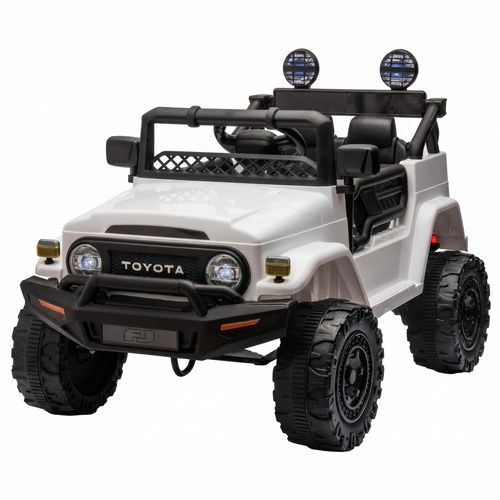
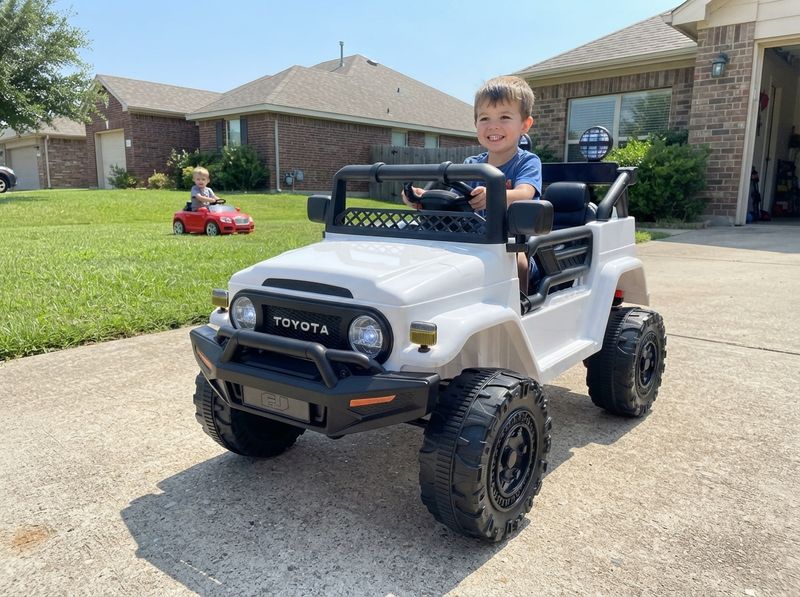
Open both doors, buckle a four-year-old in, and the 12V 7AH pack pulls the truck over grass and slight inclines without bogging down. Drive it across a bumpy lawn and the suspension with EVA wheels takes the edge off, while the 66-lb cap covers most riders for about four years of use. Check the paperwork before you order and CPSIA, CPC and ASTM F963 are all named here, where an unbranded shell of the same size prints none of them. Owners rate it 4.3 stars across 116 ratings; one reports about 30 minutes of assembly and a motor that sounds louder on concrete than on lawn. Drive a complete runtime on the first weekend, because a pack that fades early stops being the seller's problem once the window shuts.
The truck weighs 38 lbs empty, so one adult carries it back up the porch steps when the pack dies at the far end of the lawn.
Roll over a lawn ridge at walking pace and the suspension travel plus foam tread flatten it, where a rigid axle on plastic wheels sends the same ridge into the seat.
One owner logged about 30 minutes of assembly, so start the build early enough to test every switch inside the return window.
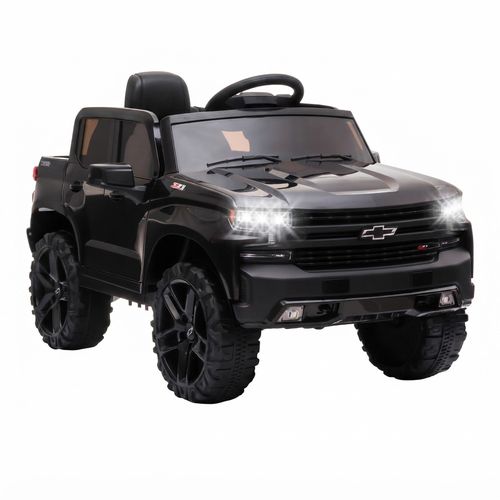
Roll the Silverado out and the weight tells: 98 lbs on the scale, the heaviest single-seat build here, with spring suspension at every wheel. Plug the 12V 4.5AH pack in after tea and 8 to 12 hours of charging returns one to two hours of yard time the next morning. Where a lighter shell skips sideways on a gravel drive, this frame tracks straight until a child gives up before the battery does. One buyer received it without a seat and the seller shipped the part plus a partial refund. Another found the windshield scratched in the box, so unpack it the day it lands rather than the night before the party.
Two adults carry it out of the carton, and that same mass keeps the truck planted when a rider throws it into a turn.
Check the 4.5AH figure on the pack label: that is what buys one to two hours, where the smaller packs here return 30 to 60 minutes.
Unpack and photograph the day it lands; one missing-seat buyer got the part plus a partial refund
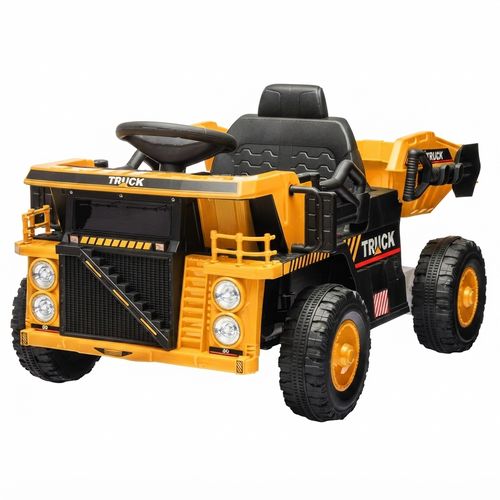
Fill the bed with sand from the sandbox, drive it across the yard, and tip the load with the electric lift. A 55-lb cap keeps this to smaller riders, and four-wheel shock absorption smooths the ride over slabs and tree roots. High and low speed settings plus the loose shovel turn a driveway into a work site for an afternoon. Where a plain ride-on car only drives, this one hauls and dumps. Buyer history is thin at 4.5 stars from two ratings, so test the lift arm, the lockable doors and the adult override during the first week while the return window still applies.
An electric tipping bed and loose shovel move sandbox sand across the yard load after load
One button starts it, so a three-year-old runs a whole snow-clearing round on the drive without an adult working a switch panel.
Only two ratings so far, so test the lift arm and doors inside the return window
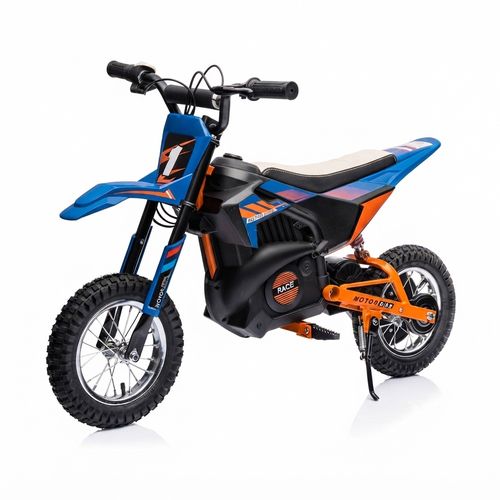
Twist the throttle on packed dirt and the 250W motor takes an eight-year-old to 13.6 mph, the fastest thing here. Ride a full 24V 9AH pack out in about 30 minutes of continuous throttle, with 12.6-inch pneumatic tires holding the rear down through the ruts. Where a plastic-wheeled ride-on skates over loose gravel, these air-filled tires dig in and hold the line through a wet corner. Stand your rider against a door frame before ordering: past 4 feet 7 inches or 139 lbs, they will outgrow this bike inside a season. Ratings sit at 4.3 across 22 buyers, though one reports it stopping on day four after two rides, so ride it hard the first weekend and keep the packaging until you are sure.
Right hand twists the throttle, left hand squeezes the brake, the same layout an eight-year-old meets later on a real trail bike.
Air in a 12.6-inch tire flexes over a rut where a solid wheel bounces, which is why the rear stays planted at 13.6 mph.
One owner reports failure on day four, so ride it hard while the return window is open
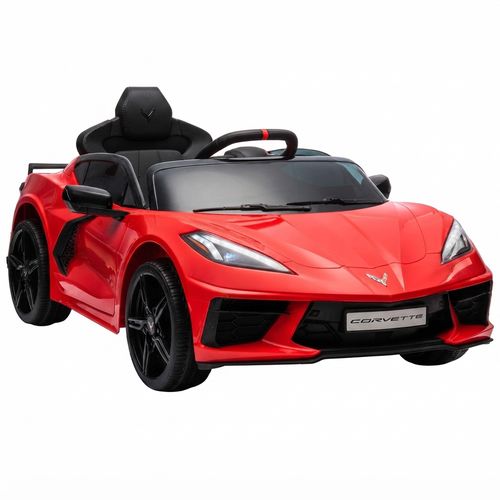
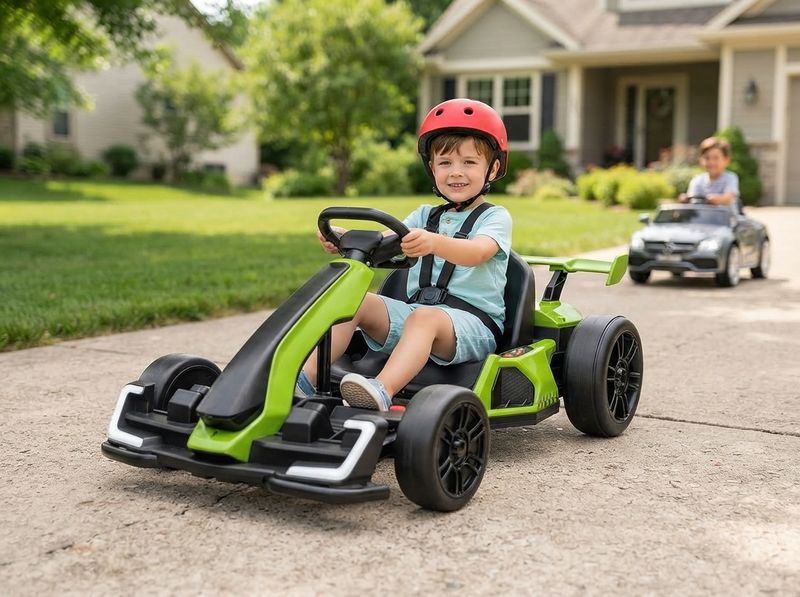
Set a three-year-old behind the visual dashboard and the low setting creeps at 1.6 mph, slow enough for a first lap on a sloping driveway. Two 30W motors move it at a pace a parent can walk beside, and the dashboard warns you before the car stops halfway down the lawn. At 35.3 lbs it is the lightest build here, liftable into a boot by one adult. Buyers rate it 4.9 stars across 37 ratings, the highest score in the line, and one owner added racing stripes to match the full-size Corvette in the same garage. Run it flat and charge it full twice in week one, while a weak pack is still the retailer's problem.
One charge returns 40 to 60 minutes of driving, enough for a birthday afternoon of laps before the pack needs the garage outlet.
The dashboard's low-battery light flags the charge early enough for a five-year-old to drive back to the porch instead of walking.
Open the 37 ratings on the Corvette and the average lands at 4.9 stars, the highest score here.
Extend the body 5.9 inches as legs grow and the same two-seater fits a three-year-old now and an eight-year-old later. Drive it over grass, brick paths and decking on a wet Sunday and the four driven wheels on 13-inch EVA tires keep gripping where lesser builds spin. Buckle two riders side by side across the 20.5-inch seat, each in their own belt, and neither can shove the other off mid-lap. This is a new listing with no buyer history yet, so treat the first week as your inspection: charge fully, load both seats, and drive a complete runtime while the retailer's return window still covers you.
Two separate belts buckle each rider independently, so a three-year-old stays strapped while an eight-year-old climbs across to the far seat.
Load both seats and the four driven wheels split the weight, so the pair still climbs a sloped lawn instead of digging the rears in.
No buyer history on this new listing, so load both seats and test inside the return window
Point it at an empty cul-de-sac and twin 300W motors push the kart to 8.1 mph, with a high-low switch for the first outings. The 24V 9Ah pack ran 30 minutes for one owner's 65-lb seven-year-old and 40 minutes for a 45-lb six-year-old, so runtime tracks rider weight closely. A 14.3-inch seat and a 175-lb listed capacity mean an adult can test-drive it before a child does. Where a ride-on car tips at speed, EVA fronts and wider nylon rears hold the drift. Rated 4.0 across 91 ratings, with steering hardware drawing the most criticism, so check it early.
Keep the switch on low for a first outing: the slow-start ramp eases the kart off the line instead of snapping the driver back.
EVA front tires and wider nylon rears break traction cleanly instead of tipping the frame
One owner logged 30 minutes with a 65-lb rider and 40 minutes with a 45-lb rider
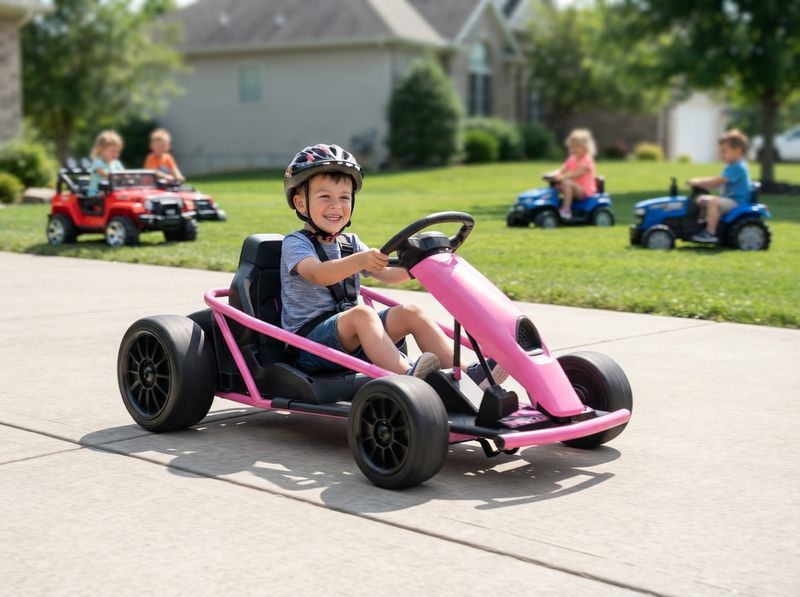
Slide the frame out through three length settings and the same kart fits a six-year-old and a fourteen-year-old. Dual 150W motors reach 8 mph across drift and sport modes, and the pack runs over an hour of mixed driving on a charge. A ramped launch keeps the start from snapping a small rider's head back. This is the lowest-rated build here at 3.8 stars across 59 ratings: owners describe a front suspension bar failing and units quitting around the three-to-four-month mark. Buy it knowing that, load it heavily in the first week, and keep every part of the box until the return window closes.
Set the frame short and a six-year-old's foot reaches the pedal without sliding forward; the longest setting clears a fourteen-year-old's knees.
Releasing the pedal brakes it, with no separate brake lever to learn, which is why a first-timer picks up the line in one afternoon.
A failing front suspension bar sags the nose and pulls the steering off line, so load it under a heavy rider while returns are open.
Send two kids out together and the Can-Am carries 140 lbs across both leather seats, with genuine four-wheel drive underneath. One owner's son followed a full-size quad through dirt, gravel and grass without getting stuck where other builds bogged down. Three speed settings keep a five-year-old on the slowest while an older sibling steers, and Bluetooth handles the music. Where a two-wheel-drive car spins one wheel and stops, four driven wheels keep the ATV moving. Rated 5.0 stars across six ratings so far, a small sample, so run it over your worst patch of lawn while the return window is open.
At 71.9 lbs the ATV takes two adults to lift into a boot, which is the trade for a frame that carries two riders.
Leather seats wipe clean after a muddy lap, where a fabric bench holds the grit in the weave until it is hosed.
Only six ratings so far, so test it on your roughest ground inside the return window
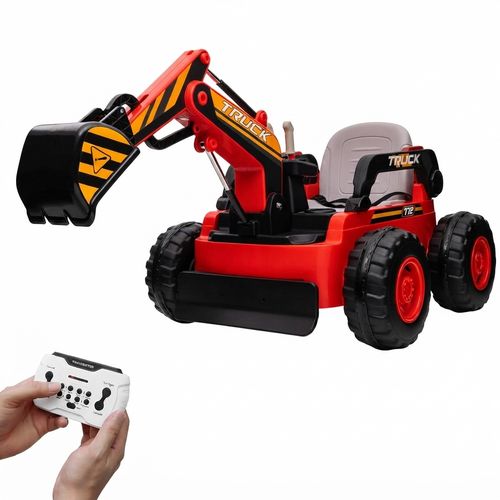
Dig a hole in the sandbox with the electric arm, spin 360 degrees on the spot, and dump the load beside the fence. Send a four-year-old out after lunch and the four 75W motors on a 12V 10AH pack keep digging for 60 minutes, the longest runtime here. Where a ride-on car only drives, this one gives a child a job to finish, and the sandbox looks different by teatime. Charge the 10AH pack overnight before the first session, because an afternoon of digging draws more than a lap of the driveway ever does. Rated 4.2 across 10 ratings, and several owners found the arm wiring poorly documented, so budget an extra half hour for assembly and test the joystick early.
Two 35W motors drive the arm on their own, so a four-year-old digs and dumps a bucket of sand with the wheels parked.
Top speed caps at 3.1 mph, roughly walking pace, so an adult keeps alongside the whole session instead of jogging after it.
The arm's wire connectors are the sticking point: owners report the controls catching in reverse, so run a full cycle in week one.
Nasitip hardware only matters where it meets the ground: a wet October lawn, a gravel track, a sloped driveway at dusk.
Stop the Car Before It Reaches the Kerb
A 2.4GHz handset pulls steering and braking away from a three-year-old mid-lap, which is what the first month is actually about. The excavator's link carries emergency braking you can trigger from the porch. One BMW M4 owner reports the connection dropping after twenty-odd minutes of driving, so stay close enough to shout rather than trusting the radio alone.
Press the stop button and the excavator brakes on the spot, mid-dig, without the child touching a pedal.
Where a pedal-only car rolls on until a foot lifts, the handset outranks the pedal on every build that has one.
Flip the switch under the seat once your rider steers a full lap alone, and the car answers the pedal instead.
Dual driving mode stretches a single 12V purchase across years: a toddler rides while an adult drives, and the same truck waits for the pedal at age three. One Silverado owner describes a one-year-old walking over to the truck every day to be driven around the yard. Run it across a slab-joined patio and the sprung corners swallow the joins that a bare-frame ride-on sends straight into the seat.
Turn the seat switch over and a toddler who cannot reach the pedal still gets a full lap of the garden.
Hold the pedal down from a standstill and the motor feeds power in over a second or two, which is why a first-timer stays seated.
Where a pedal-only ride-on waits in the shed until a child turns three, this one earns its space from the first birthday.
Follow a Full-Size Quad Across Dirt Without Getting Stuck
Put two children and 140 lbs on the Can-Am 24V ATV, point it at the dirt track behind the house, and all four wheels keep digging where a 12V car quits. One owner's son followed a full-size quad through dirt, gravel and grass without bogging down where other builds stopped. Swap to the go-kart on the same ground and the twin 300W motors pull a 175-lb adult up the slope your ten-year-old just walked.
Point a 12V car at thick wet lawn and it slows to walking pace; the 24V builds keep pulling across the same ground.
A 175-lb capacity means an adult can test-drive the go-kart before a ten-year-old takes it down the road.
Ride the motocross bike into a rutted trail after rain and the air-filled tires bite where a hard plastic wheel skids sideways.
Park the licensed Corvette beside the full-size one in the same garage and a five-year-old reads the same grille, the same badge and the same dashboard on both. One Corvette owner added racing stripes to match the full-size car sharing that garage. Buy the badge and you buy the shell only: owners who logged complaints at month two named the motor and the steering, never the paint.
A five-year-old glances at the dashboard light halfway through a lap and knows the pack is nearly flat before the car stops on the lawn.
Hold a photo of the real Can-Am next to the ride-on and the grille lines match; an unbranded shell misses those proportions by inches.
Open the scores before you pick the paint: buyers rate the licensed cars 4.2 to 4.9 stars and the unlicensed karts 3.8 to 4.0.
Owners who kept theirs past February checked charge hours, the 66-lb cap and motor pull on wet grass first.
Ratings You Can Open and Read Yourself
Scroll the scores before you buy: the Corvette holds 4.9 stars over 37 ratings, the green drift kart sits at 3.8 across 59.
Stop Guessing Whether the Motor Clears Wet Grass
Ankle-deep lawn on a Saturday morning stops a 12V car's wheels within a few feet. Drive the twin 300W go-kart across the same patch an hour later and it pulls straight through.
The Handset Matters More Than the Top Speed
Watch a three-year-old's first lap: an adult thumbs the 2.4GHz handset and the car stops before it reaches the kerb.
8 to 12 Hours of Charge, 30 to 60 Minutes of Play
Eight hours on the charger buys a half-hour of driving; one owner logged 30 minutes with a 65-lb seven-year-old.
One Kart That Still Fits at Age 12
The drift kart's seat moves back a notch the summer your six-year-old outgrows it, and the same frame still carries that rider at fourteen.
No Brand Guarantee, So Test It in Week One
Buyers hunting for a guarantee line on these listings come up empty, which leaves the retailer's return window carrying the whole risk from day one. Charge it overnight, then drive the pack flat on the first Saturday you own it, while returns still cost nothing.
How Many Watts Does "Handles Hills" Actually Mean?
Read a category guide tonight: it names a voltage, then stops short of the 300W, 7AH and 98-lb figures.
300W x2 dual-drive motor
Twin 300W motors carry the go-kart up a grass slope that stalls a single-motor build halfway.
Ask a guide what handles hills means and it answers 24V, never the 300W figure you need before the first wet Saturday.
manufacturer spec
12V 7AH battery pack
Check the Toyota truck's battery tag before buying: 7AH tells you how much charge the pack holds.
Read the voltage explainers twice and you still will not find the 7AH number that decides whether your child gets 30 minutes on the lawn or 60.
manufacturer spec
35 to 98 lbs unassembled
At 35.3 lbs the Corvette goes into a car boot alone; the 98-lb Silverado needs two adults to shift it.
Roundups tell you the age range, then leave you to discover on delivery day that the box needs two adults to lift off the kerb.
manufacturer spec
10 to 20 min assembly
Build the tractor and its trailer in the driveway the night before a birthday: assembly runs 10 to 20 minutes.
Nobody tells you how long the build takes until you are sitting on the kitchen floor at midnight with the printed guide.
manufacturer spec
1.6 to 13.6 mph
A first-time rider starts in the Corvette's 1.6 mph low mode and finishes on the 13.6 mph motocross bike.
Category FAQs hand you a 3 to 5 mph bracket, which tells the parent of a nervous three-year-old nothing on the morning of the first lap.
manufacturer spec
4.3 stars / 561 verified reviews
Read the scores yourself: 561 verified buyers average 4.3 stars, with a spread from 3.8 to 5.0 by model.
Open an unbranded seller's page tonight and you can count the reviews on one hand, if the page shows any at all.
561 verified buyer reviews
Charge It Tonight, Ride It Tomorrow
Unbox on Friday evening, charge overnight, and your rider takes a first lap on Saturday morning after a 10 to 20 minute assembly.
1
Build It the Night Before
Unbox the tractor and trailer in the driveway: assembly runs 10 to 20 minutes with the printed guide.
2
Charge the Pack Overnight
Plug it in after bedtime and eight to twelve hours on the charger returns 30 to 60 minutes of driving by breakfast.
3
Keep the First Laps in Adult Hands
Pair the handset before your rider sits down, then steer and brake from a few feet away for the first three laps.
4
Hand Over the Pedal
Turn the seat switch to pedal mode the week your child asks to drive, usually a year or two after the first ride. Watch that first pedal press: the car rolls away over a second or two instead of snapping forward, and a four-year-old stays upright.
What Owners Wrote After the First Season
Eight owner accounts, kept in their own words: two of them are complaints, because the scores here run from 3.8 to 5.0.
★★★★★
Bought this for a three-year-old who had never driven anything. The low setting creeps at 1.6 mph, which sounds slow until you watch a first lap on a sloping driveway and realise slow is the whole point. It weighs 35 lbs, so I lift it into the boot alone when we visit my parents. I added racing stripes to match the full-size Corvette that shares the garage, and he now checks the dashboard light before every run.
Marcus D.Verified Purchase
Licensed Corvette 12V Ride-On Car
★★★★★
Three charges in a full year, and it has hauled sticks across the lawn every weekend of it. Assembly ran about fifteen minutes on the driveway the night before a birthday. The foam tires pull through the gravel by the shed where our old plastic-wheeled car used to sit and spin. One mark off because the certification line is printed here and nowhere else I shopped, which made me wonder what the others leave out.
Priya R.Verified Purchase
12V Electric Tractor with Trailer
★★★★★
The frame adjustment is the reason I bought it. My six-year-old fits now and the longest setting will clear his knees at fourteen. Then the front suspension bar sagged around month three and the steering pulled left. I should have loaded it heavily in week one instead of waiting for better weather. If you buy this one, ride it hard the first weekend while returns are still open, because nothing else stands behind it.
Dale W.Verified Purchase
24V Drift Go-Kart with Adjustable Frame
★★★★★
My son followed a full-size quad up the back track through dirt, gravel and wet grass and never bogged down once. Four driven wheels is the whole difference. Both kids ride at 140 lbs combined with separate belts, so the argument over the middle seat ended the day it arrived. The leather wipes clean after a muddy lap. Only six of us have rated it so far, so I ran it over the worst patch of lawn in the first week.
Angela T.Verified Purchase
Licensed Can-Am 24V Two-Seater ATV
★★★★★
The shell is convincing next to the real M4 in our drive, grille and badge included. Two things to know. The rear axle sat offset out of the box and I straightened it the same afternoon, well inside the return window. The remote link also dropped once after about twenty minutes of driving, so I stay close enough to shout rather than trusting the radio. On grass it only moves on the top setting.
Ben K.Verified Purchase
Licensed BMW M4 12V Ride-On Car
★★★★★
It arrived without a seat. The seller shipped the part and discounted the truck, which I did not expect, but unpack the day it lands rather than the night before a party. Once built it is the steadiest thing here: 98 lbs on the scale, springs at every wheel, and it tracks straight on our gravel drive. One charge gives us over an hour, and my one-year-old walks out to it every morning to be driven round the yard.
Rosa M.Verified Purchase
Licensed Chevrolet Silverado 12V Ride-On Truck
★★★★★
I timed it. Thirty minutes on a full charge with my 65-lb seven-year-old, forty with his lighter sister. Runtime tracks rider weight almost exactly, so ignore any single number you read anywhere. Twin 300W motors pull it up the grass slope behind the house that stopped our old 12V car dead. I test-drove it myself first. Steering is the part I keep checking, since that is where the low scores land.
Tomas L.Verified Purchase
24V Go-Kart with Twin 300W Motors
★★★★★
An hour of digging on one charge, which is the longest runtime we own. She fills the bucket from the sandbox, spins the whole thing 360 degrees on the spot and dumps it by the fence until teatime. Budget an extra half hour for assembly: the arm wiring came with no useful diagram and I worked it out by hand. At walking pace I stay beside her the whole session instead of jogging.
Nadia S.Verified Purchase
12V Ride-On Excavator Digger Truck
Since 2017, and What the Low Ratings Say
Nasitip has sold licensed ride-on cars, karts and ATVs since 2017, and you can open 561 verified buyer reviews today and average them at 4.3 stars. Read past that average and the spread shows up: the Corvette holds 4.9 across 37 ratings, while the green drift kart sits at 3.8 across 59.
Sort to the one-star reports first, the same way you would walk around a used car before paying for it. A grandparent describes a tractor that stopped starting inside a year, after the return window had already closed. Another describes a kart that quit two months after Christmas. Drive yours hardest in the first week rather than the fifth, because nothing here ships with a brand guarantee behind it.
One buyer charged the tractor three times across twelve months, hauling a three-year-old over gravel and grass on a 66-lb build. A heavier truck drew the opposite report: 10 minutes of drive time on a full charge, logged by an owner in the same season.
Look closely at the licensed Silverado before you order and you will find a second storefront name, RCtown, printed on the same build.
Owners write in around month two: a pack down to 10 minutes, a shut return window, a motor stalled in wet lawn.
The pack that quits in week one
One owner rode the dirt bike twice before it stopped on day four. Another measured 10 minutes of drive time on a full charge. Charge it fully and run the battery flat the same week it lands, not the week of the party.
The return window closes before the fault shows
A tractor stopped starting inside a year, after the window had shut, and the grandparent could not get it replaced. A kart quit under two months after Christmas with the same outcome. Mark the return date on the calendar the day it arrives, because the faults land in month two or three, just after cover ends.
Thick grass that stalls a 12V motor
Wet lawn drops a 66-lb-capacity 12V car to walking pace, and hard plastic wheels make it worse. Push a 24V build on EVA or air-filled tires across the same patch and it keeps rolling to the far fence. Walk your own lawn before you pick the paint: ankle-deep grass in April decides the voltage for you.
Missing or bent parts in the carton
Open the carton on the doorstep, because these arrive damaged more often than a 4.3-star average suggests. One Silverado landed without its seat, though the seller shipped the part and discounted the truck. Another windshield came scratched, and excavator buyers found the arm wiring undocumented. Photograph anything wrong the same hour it lands, before the packaging goes out.
No brand guarantee behind any of it
Read the warranty line on the BMW M4 before you order and it says No Warranty outright, and no other build here contradicts it. That leaves the retailer's return window doing all the work from the day the carton lands. Put the heaviest rider in the house on the seat and drive a full runtime before that window shuts.
No brand guarantee stands behind any build here, so the retailer return window carries it. Pick a size and compare the specs side by side before you order.
One Configuration to Start With
Weigh the rider against the 55 to 175 lb caps before you shop: that one number sinks more first purchases than top speed does.
Outdoor Play Safety Consultant
Composite industry perspective
Parents who return a car in week two nearly always bought the wrong cap or the wrong tires, not too little speed. A 66-lb 12V car suits a three-year-old on flat concrete and very little else; that same child on a gravel yard needs a 24V build with EVA or air-filled tires. Start slow: the Corvette's 1.6 mph low setting exists so a first lap does not end in a hedge. Treat the seven days after the carton opens as your only inspection, because no guarantee follows this purchase home.
Expert perspective: a composite view of industry practice, and individual experiences vary.
Charge the pack a full 8 to 12 hours before the first lap, because a half-charged lead-acid battery never recovers its full capacity.
Load the seat to its rated cap during week one, so a weak motor shows itself while the retailer's return window is still open.
Walk the ground your child will actually ride on before choosing: hard plastic suits concrete, EVA or pneumatic handles grass and gravel.
Drive the first 30 minutes the day it lands: that half hour tells you more than the listing did, and returns close fast.
Day 1
Unbox in the driveway, run the 10 to 20 minute assembly, and put the pack on charge before bed. Test the horn, the lights and the adult override the moment it wakes: the retailer's return window has already started, and it is the only cover here.
Week 1
Keep the first laps on flat concrete for the whole of week one, before the lawn gets a turn. Kneel behind the car and check the rear axle sits square, because owners who spotted an offset axle spotted it the day the carton opened.
Month 1
A stopwatch settles it in month one: run from a full charge to the moment the pedal stops answering, and write the number down. If that number lands under 30 minutes, the pack is telling you now, while returns are still open, rather than in February.
Year 1 and beyond
The first frost is the deadline for the pack: carry it indoors part-charged, or a cold shed flattens it by March. The season your rider crosses the 66-lb cap, the same car passes down to a younger sibling instead of going to the kerb.
Ready for Day 1? The 35-lb Corvette lifts into a car boot alone, while the Silverado needs two adults.
12V, 24V or Two Seats: What Changes
Top speed climbs from 1.6 mph to 13.6 mph across the tiers, and the weight cap nearly triples.
Nasitip ride-on tiers compared by rider cap, age, speed, weight, drivetrain and rating
What changes
12V licensed cars
24V go-karts and dirt bike
24V 4WD two-seaters
Rider weight cap
55 to 70 lbs
139 to 175 lbs
140 lbs combined across two seats
Listed age range
3 to 8 years
6 to 15 years
3 to 8 years
Top speed
1.6 to 5 mph
8 to 13.6 mph
3 selectable speed settings
Vehicle weight unassembled
35.3 to 98 lbs
48 to 54.1 lbs
71.9 to 75.6 lbs
Drivetrain
2WD on the cars, 4 x 75W four-wheel drive on the excavator
rear-wheel drive, twin 150W or 300W motors
4WD, all four wheels driven
Buyer rating span
4.2 to 4.9 stars
3.8 to 4.3 stars
5.0 stars on six ratings
Weigh the rider first, then walk the ground they will ride on. Those two numbers settle the tier before styling does.
Questions Buyers Ask Before Ordering
Forty-four answers pulled from what owners and shoppers actually ask: voltage, runtime, weight caps, cover.
What is a Nasitip ride-on vehicle?
Nasitip builds battery-powered ride-on toys for children aged 3 to 15: licensed cars and trucks on 12V packs, plus go-karts, a dirt bike, an excavator and two-seat ATVs on 24V. Most carry a 2.4GHz parental handset alongside a foot pedal and steering wheel, and ratings across the line average 4.3 stars.
Who are these built for?
Riders from 3 to 15, split by voltage. A licensed 12V car suits a three-to-eight-year-old on a flat driveway with a 66-lb cap. The 24V karts and dirt bike start around age six and carry riders up to 175 lbs.
What does "officially licensed" mean here?
The bodywork is moulded under licence from BMW, Toyota, Chevrolet, Corvette or Can-Am, so grille, badging and dashboard layout copy the real vehicle instead of approximating it. Licensing covers appearance only. It says nothing about motor life or steering hardware, though the licensed cars here do rate higher than the unlicensed karts, 4.2 to 4.9 against 3.8 to 4.0.
Is an electric ride-on toy for kids better than a pedal car?
A pedal car stops at the first patch of lawn. A 12V motor pulls a child across grass and slight inclines, and an adult can drive from the handset before the child can steer. The trade-off is charging: 8 to 12 hours for 30 to 60 minutes of play.
Which model is rated highest?
The Corvette 12V car, at 4.9 stars across 37 ratings. The Can-Am two-seater shows 5.0, but only six buyers have rated it, which is too small a sample to lean on.
What is the real difference between 12V and 24V ride-on cars?
Voltage sets torque, speed and rider size. The 12V cars here top out between 1.6 and 5 mph, cap riders at 55 to 70 lbs, and list for ages 3 to 8, which suits flat driveways and short grass. The 24V karts, dirt bike and ATVs run 8 to 13.6 mph, carry 139 to 175 lbs, and list from age six upward, clearing gravel and mild inclines that stall a 12V motor. Pick the tier that matches your yard and your rider's weight, not the styling.
How fast do they go?
From 1.6 mph in the Corvette's low setting to 13.6 mph on the 24V motocross bike. The go-karts sit at 8 to 8.1 mph. Most cars offer two or three selectable speeds, and the handset overrides all of them.
How long does the battery last per charge?
Thirty to sixty minutes of continuous driving, and rider weight moves that number. One go-kart owner logged 30 minutes with a 65-lb seven-year-old and 40 minutes with a 45-lb six-year-old on the same pack. The excavator's 12V 10AH battery is rated for 60 minutes. Thick grass and inclines drain it faster than concrete does.
How long does a full charge take?
Eight to twelve hours on most listings. Plug it in after bedtime and it is ready the next morning. Leaving a lead-acid pack sitting flat for weeks shortens its working life.
What weight can each model carry?
From 55 lbs on the dump truck to 175 lbs on the go-kart. Most licensed 12V cars cap at 66 lbs, the excavator at 70, the motocross bike at 139, and the Can-Am at 140 lbs combined across both seats. Check the specific listing rather than assuming a brand-wide figure, because the spread is wide enough to matter.
Is there a manufacturer warranty?
No. The licensed BMW M4 listing states "No Warranty" outright, and no warranty field appears on the others. Buyer protection runs through the retailer's standard return window instead of a brand guarantee. That makes the opening week the only period in which a fault costs you nothing.
What happens if a motor fails in month two?
Once the return window has closed, no brand guarantee sits behind it. Owners describe exactly this: a kart that quit under two months after Christmas, a tractor that stopped starting inside a year. Contacting the seller through the listing is the remaining route and results vary. One buyer with a missing seat did get the part shipped plus a partial refund.
Are these sold under another brand name?
One listing, the licensed Chevrolet Silverado ride-on truck, shows RCtown in the brand field while the product title still opens with Nasitip. Same build, same specs, second storefront name.
How long has the brand been around?
Since 2017, according to the brand's own listing copy, which appears on most of the product descriptions. No independent brand history exists beyond that line.
How much do the vehicles themselves weigh?
Between 35.3 and 98 lbs unassembled. The Corvette is lightest and goes into a car boot with one adult lifting. The licensed Silverado is heaviest at 98 lbs and needs two people to move it once built. Go-karts sit between at 50 to 54 lbs, and the two-seat ATVs land at 71.9 and 75.6 lbs. Weigh that against your porch steps and the boot you plan to carry it in, because the figure is rarely printed in a buying guide.
What motors do the go-karts use?
Two 300W motors on the rose go-kart and two 150W motors on the green drift kart. The motocross bike runs a single 250W motor, and the excavator drives four 75W motors, one per wheel.
Do they all come with a parental remote?
Most do, on a 2.4GHz link, including every licensed car and the excavator. The go-karts and the motocross bike are rider-controlled, since they are built for older children who steer unaided. Check the individual listing before assuming remote override is included.
Which models seat two children?
The licensed Can-Am ATV, rated 140 lbs across two leather seats, and the extendable two-seater with a 20.5-inch seat width and separate belts. Everything else is single-seat. One tractor owner did report the frame holding a 120-lb adult for a demonstration lap, though that is not a rated use.
Do any have four-wheel drive?
Four-wheel drive appears on the Can-Am ATV, the extendable two-seater and the 12V excavator, which drives four 75W motors. The rest run two driven wheels. On wet grass that difference decides whether the vehicle moves at all.
What battery chemistry is inside?
Only the Corvette listing specifies it: a 12V lead-acid pack. The others state voltage and amp-hours without naming the type. Treat them as sealed lead-acid unless a listing says otherwise, and store them the way lead-acid packs want, indoors and partly charged.
Are these ASTM F963 or CPSIA certified?
Some listings state it, most do not. The 12V tractor with trailer names ASTM F963 and CPSIA, and the licensed Toyota truck names CPSIA, CPC and ASTM F963. The remaining listings make no certification claim at all, so do not read one line as brand-wide coverage. If certification matters to you, buy from a listing that prints it and keep the packaging with the markings on it.
How reliable are these after the first year?
Mixed, and the ratings show it honestly. The licensed cars hold 4.2 to 4.9 stars, and one tractor owner reports charging it three times across a full year of use. The karts do worse: 3.8 stars across 59 ratings on the green drift model, with owners describing a front suspension bar failing and units stopping around the three-to-four-month mark. Steering hardware and batteries draw most of the criticism. Nothing here is an heirloom toy, and the tier positioning reflects that.
Do the ratings come from verified buyers?
All 561 ratings come from verified purchases on the retail listings. Each model's score is open line by line, which is how the 3.8 to 5.0 spread across the line becomes visible at all.
Is adult supervision still needed with remote override?
Always. A handset, a seat belt and a ramped launch reduce risk; none of them replace an adult within reach. Radio links can drop, and one BMW M4 owner reports exactly that after twenty-odd minutes of driving.
Are they waterproof?
None of the listings publish an IP rating, so treat these as outdoor-tolerant rather than weatherproof. Damp grass is fine. Standing water, hosing down and rain storage are not, and the charging port should stay dry.
What if parts are missing from the box?
Photograph the carton and its contents the day it lands, then contact the seller through the listing. One buyer whose Silverado arrived without a seat received the part plus a partial refund. Speed matters here, because the window closes.
Can they handle grass, gravel or rough terrain?
That depends on the tier. The 24V builds manage it: the Can-Am's four driven wheels followed a full-size quad through dirt, gravel and grass for one owner without bogging down, and the motocross bike's air-filled tires bite into ruts. The 12V cars handle short dry lawn and slight inclines, then struggle. One BMW M4 owner describes it moving through grass only on the fastest setting, and slowly at that.
Why does a ride-on car stall on grass?
Torque and tires. A 12V motor at 30 to 35W keeps little pull in reserve, and hard plastic wheels skid instead of gripping. The 24V builds pair 150W to 300W motors with EVA or pneumatic tires, which is why the same lawn stops one and not the other.
Can two kids of different ages share one 12V car?
Not safely on a single-seat build with a 66-lb cap, which most of these are. Two riders together exceed the rating and put the seat belt out of use. The Can-Am ATV or the extendable two-seater is the right answer for siblings.
How far does the remote reach?
Far enough to supervise from a porch across a normal garden, on a 2.4GHz link. Line of sight matters, and no range figure is published for any individual build. One BMW M4 owner reports the link dropping after twenty-odd minutes of driving, and a hedge or a parked car between you and the rider will cut it shorter still. Stay close enough to shout as well as click, and treat the handset as a backstop rather than a leash.
Can the go-kart handle a sloped yard?
A mild slope, on the 24V karts with twin 300W or 150W motors. Steep or wet grass asks a drift kart to do what an ATV does. The four-wheel-drive Can-Am is the build for a genuinely uneven garden.
Does the music player survive damp grass?
The speakers and USB ports are not sealed, and no listing publishes an IP rating. Light dew is survivable. Rain, hosing and overnight storage on wet lawn are what kill the electronics.
How loud is the motor?
Quiet next to anything petrol-driven. One owner describes the start-up engine sound effect as loud enough to startle a three-year-old at first, though the drive motor itself is a hum.
How do I store the battery over winter?
Indoors, at a partial charge, away from a freezing garage. Lead-acid packs lose capacity when they sit flat for months, so top the charge up every four to six weeks rather than leaving the charger connected permanently. Bring the vehicle in too, since polypropylene bodywork lasts better out of the frost.
Is a 24V ride-on too fast for a four-year-old?
Usually, on the karts and the dirt bike. The motocross model lists ages 8 and up at 13.6 mph, and the go-karts start around six. For a four-year-old, a licensed 12V car at 1.6 to 5 mph with remote override is the honest match, and the speed selector keeps it slow.
When should I move from 12V to 24V?
When the rider passes roughly 55 to 66 lbs, or steers a full lap unaided and finds the top speed dull. That tends to land between six and eight. The go-kart's 175-lb rating leaves years of headroom after the switch.
Are licensed designs better built than generic ones?
Not automatically, though on this line they do rate better. Licensing controls how the shell looks, not what sits inside it. The licensed cars here run 4.2 to 4.9 stars while the unlicensed karts sit at 3.8 to 4.0, which suggests the tiers differ in more than badging. Credit the simpler mechanics of a 12V car rather than the licence itself, and read the individual model's ratings before deciding.
Which go-kart should I pick?
The rose 24V kart, if the rider is heavier or you want an adult to test it first: twin 300W motors, 8.1 mph, a 14.3-inch seat and a 175-lb rating, at 4.0 stars from 91 buyers. The green drift kart adjusts through three length settings for a growing rider, but sits at 3.8 with failures reported around month three.
Does the plastic body crack in cold storage?
No listing publishes a cold-weather rating. Polypropylene and plastic shells stiffen in frost, so a garage or shed beats open ground. Bring the battery indoors regardless of where the body sits.
How difficult is assembly?
Ten to twenty minutes on the tractor, around thirty on the licensed Toyota truck according to one owner, and longer on the excavator. Several excavator buyers found the arm wiring undocumented and one opened the housing to connect it. Budget an extra half hour there, and build it the night before rather than the morning of a party.
Can I replace the battery myself?
On most builds, yes: the packs use plug connectors and sit under the seat or bonnet. Match the voltage and amp-hour rating to the original, because a 24V pack in a 12V car burns out the motor. One excavator owner added a second 12V pack to extend runtime, which is a modification rather than a supported repair.
What does a replacement battery cost?
No replacement price is published for this line. Across the category, a 12V pack is an inexpensive part and a 24V pack costs noticeably more, with capacity driving the difference. Check the current listing for the pack that matches your model.
Can I get replacement parts after the return window closes?
No published parts channel exists, and no manufacturer guarantee stands behind it. Contacting the seller through the listing is the route owners describe, with mixed outcomes: one had a missing seat shipped free, another could not get a dead tractor replaced. Order a spare charger early if the vehicle is a daily-use gift.
At what age do kids outgrow these?
The 12V cars run out at 66 lbs or around age eight, whichever comes first, and most children lose interest near that point anyway. The 24V karts stretch to 14 or 15, and the motocross bike lists a 4-foot-7 height limit rather than an age. Weight usually ends the run before boredom does, which is why the 175-lb go-kart keeps a rider engaged years after a licensed car has moved to a younger sibling.
Still deciding? Weigh your rider, then compare the 12V and 24V tiers side by side.
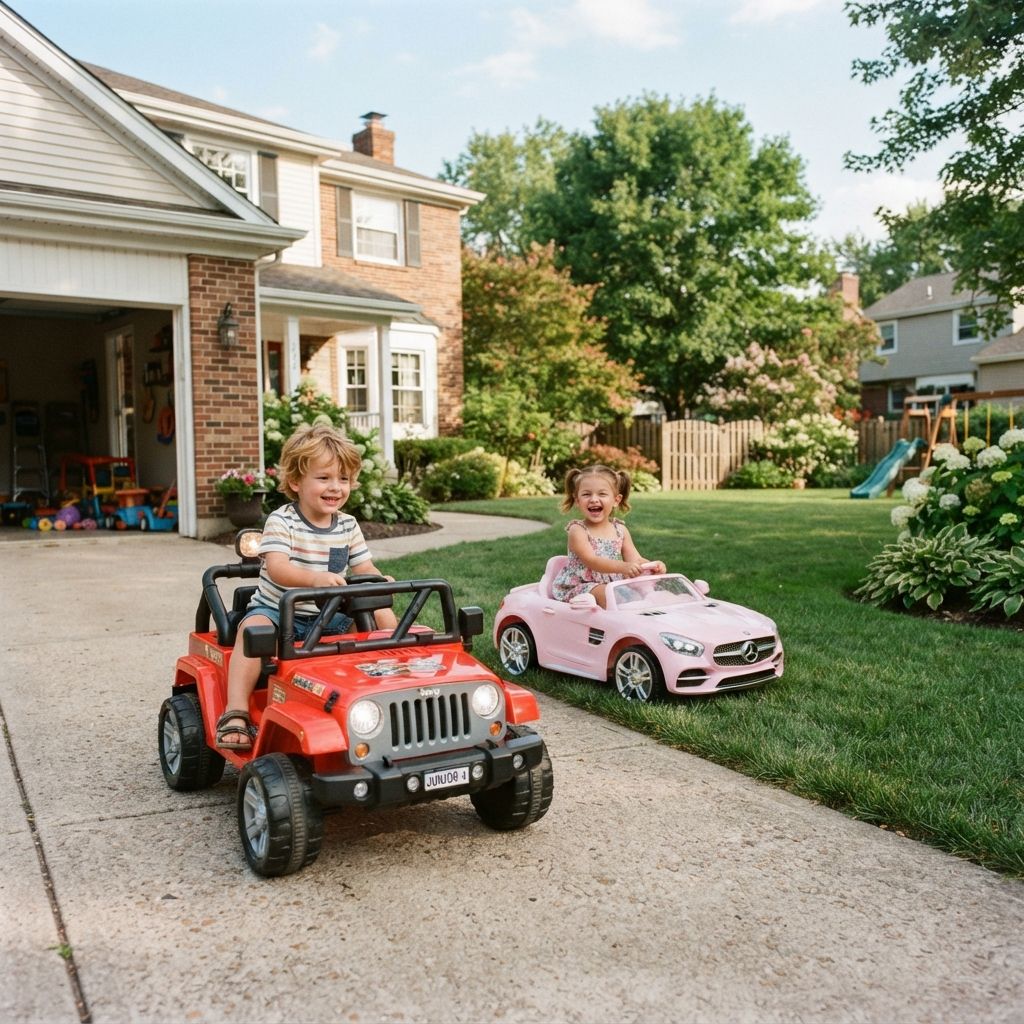
Ride-Ons on Real Lawns and Driveways
Concrete, gravel, wet grass and a sandbox: the ground each tier was built for.
Before the Next Birthday
Get the Ride-On Sizing Guide plus new-model alerts: voltage tiers, weight caps and age ranges on one page.
No spam. Unsubscribe anytime.
Cookies remember your choices here. Read the Privacy Policy.